3 Simple Ways to Make Your Day a Little Healthier

Success is the product of daily habits—not once in a lifetime transformations.
― James Clear, Atomic Habits
Making small changes to your diet can have a big impact on your overall health. Try these three simple tips to make each day a little healthier.
Read Food Labels
Manufactured foods are the most common source of excess sugar and salt. A quick look at the food label will help you determine if a product is safe to consume in moderation or left on the grocery store shelf.
To begin, start with the Nutrition Facts section. You’ll find the proper serving size and how many servings are in one package there. You can also learn how much total fat, sodium (salt), fiber, and other nutrients you’ll get in each serving.
Next, take note of the Ingredients list to see what’s actually in the food. Ingredients are listed in order from greatest to least. So, the product includes more of the ingredients at the top of the list and less of ingredients at the bottom.
A quick read of the label will help you discover undesirable ingredients, such as preservatives, hydrogenated oils, artificial flavors and colors, artificial sweeteners, and other fillers and substitutes that can be hard to pronounce and sound more like a chemistry project than edible sources of nutrition.
✏️ Tip: To avoid accidentally consuming too much sugar, be on the lookout for the following alternative names for sugar in the ingredients list:
🚫 Sugars: beet sugar, brown sugar, buttered sugar, cane sugar, caster sugar, coconut sugar, confectioner’s sugar, date sugar, evaporated cane juice, golden sugar, invert sugar, muscovado sugar, organic raw sugar, and raspadura sugar
🚫 Syrups: agave nectar, carob syrup, golden syrup, high-fructose corn syrup, honey, malt syrup, maple syrup, oat syrup, rice bran syrup, and rice syrup
🚫 Added Sugars: barley malt, cane juice crystals, corn sweetener, crystalline fructose, dextran, and disaccharides
The Percent Daily Value (% DV) tells how much of a nutrient in a portion of food or beverage contributes to a daily 2,000-calorie diet. Although the typical person requires 2,000 calories each day, depending on their lifestyle. Your doctor may recommend more or less and should be consulted to determine the appropriate amount to meet your goals.
Measure and Control Portion Sizes
Stay in control by measuring and limiting your intake to the daily recommended portions of the foods you love. An easy way to do this is simply by using smaller plates and bowls. Having less room to pile on the food will help you stay on track without feeling deprived.
Eating slowly and taking the time to chew your food properly can also help to help with overeating. It takes around 20 minutes for your brain to signal fullness once you start eating. Slow eating allows ample time for the signal from your brain to arrive, indicating that you are full. Feeling full and satisfied leads to reduced calorie intake.
Avoiding seconds can also be a helpful way to control portion sizes. After you have made your plate, take 1-2 minutes to pack and store the leftovers in the refrigerator so that you aren’t as tempted to go back for more.
Prepare Meals At Home
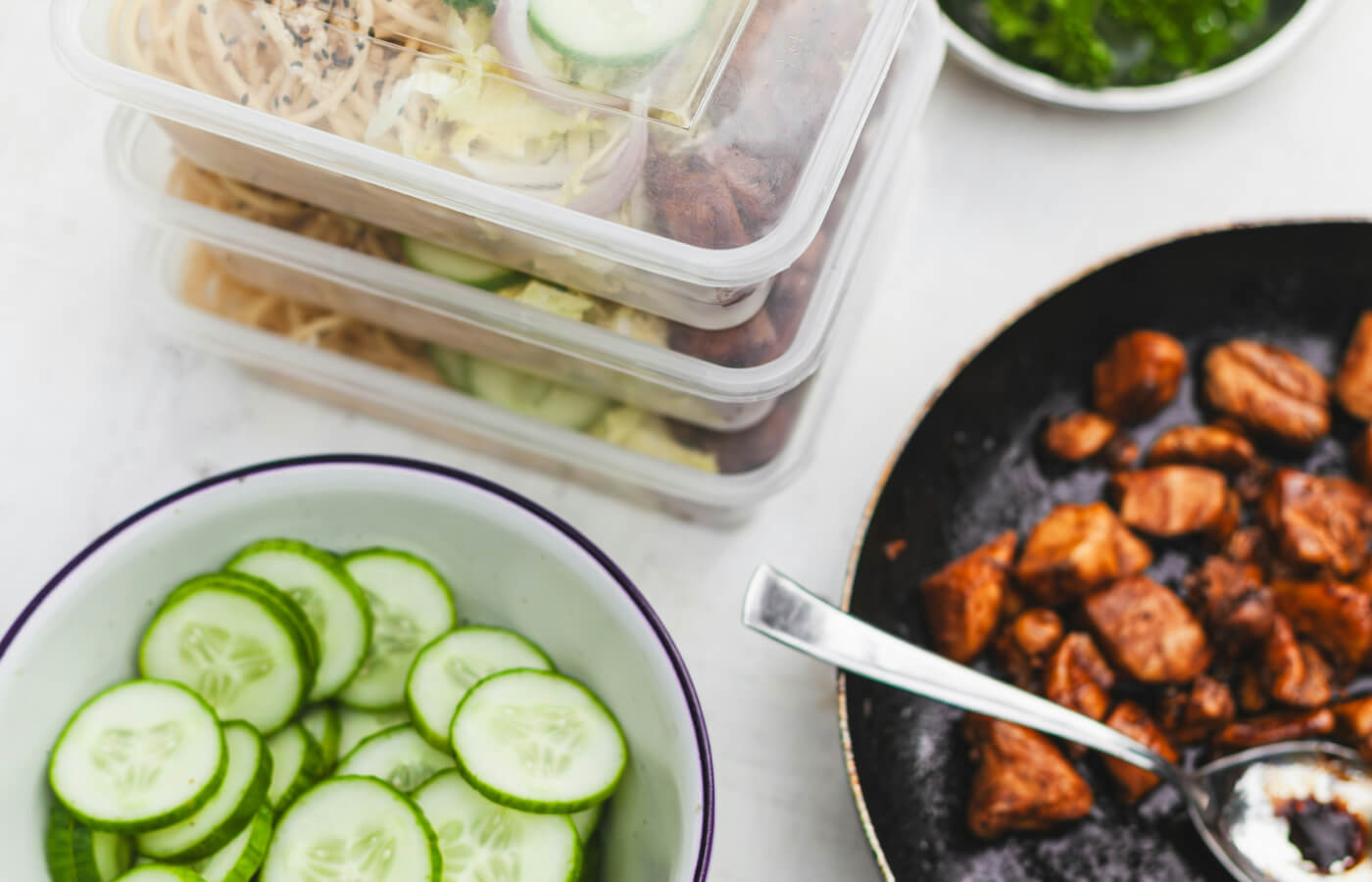
Cooking your meals at home is a great way to monitor ingredients and control your portion sizes. It could also save you a ton of money!
According to the Bureau of Labor Statistics, the average American household spends about $3,000 a year dining out. And as we’ve previously noted, many manufactured (commercially prepared) foods are high in fat, salt, and sugar.
When we prepare meals at home, we know exactly which ingredients and how much of each will be included in the meal. Planning ahead by creating a menu and grocery list helps to avoid spontaneous trips to the grocery store or dining out.
And, because a $13 restaurant meal is about 325% more expensive than the $4 meal you could prepare yourself, this is a habit that can quickly and drastically improve your financial and physical health!
It can take a few months before you start to see benefits, but keep in mind that change takes time. You will eventually achieve your goals if you have discipline, determination, and a few easy habits.